Temp-to-Perm Conversion Rates: What the Numbers Say About Landing a Full-Time Role in 2026

Infographic showing temp-to-perm conversion rate

If you’re considering temporary work as a stepping stone to permanent employment, you’re not alone—and the data shows you’re making a smart move. A recent survey by the American Staffing Association revealed that nearly 60% of temporary workers successfully transition into permanent positions (American Staffing Association), proving that temp-to-hire opportunities are more than just a foot in the door. At Midwest Staffing, we’ve been connecting job seekers with leading employers across Minnesota and North Dakota since 1990, and we’ve seen firsthand how temporary assignments can launch lasting careers.

For employers, the numbers tell a compelling story too. The median temp-to-perm conversion ratio among large contingent workforce buyers was 10% for North American companies, according to Staffing Industry Analysts (Staffing Industry Analysts)—meaning one in ten temporary workers transitions to a traditional employee role. But that’s just the baseline. With the right staffing partner, the right preparation, and a clear understanding of what employers are looking for, candidates can dramatically improve their chances.

Six in 10 staffing employees (64%) work in the industry to fill in the gap between jobs or to help them land a job (American Staffing Association), making temporary work one of the most strategic paths to full-time employment available today. Whether you’re a job seeker exploring contract-to-hire opportunities in the Twin Cities or Fargo area, or a business considering temp-to-perm hiring to reduce recruitment costs, understanding today’s conversion rate trends can help you make smarter workforce decisions heading into 2026.


Understanding Temp-to-Perm Conversion Rates by the Numbers

Before diving into strategies, let’s look at what the data actually tells us about temp-to-perm conversions in today’s job market.

Key Industry Statistics for 2025-2026

  • Nearly 60% of temporary workers successfully transition into permanent positions, according to the American Staffing Association. (American Staffing Association)
  • The median conversion ratio among large companies is 10% in North America, 8% in Asia Pacific, and 5% in Europe. (Staffing Industry Analysts)
  • Over 70% of employers use temp-to-hire as part of their permanent hiring pipeline, making temporary work a legitimate path to career advancement. (Constellation Search Group)
  • 35% of temporary workers are offered permanent positions by their clients, and 66% of those workers accept the offers. (Alliance Employment Services)
  • U.S. staffing companies employed 2.2 million temporary and contract workers per week in late 2024, with numbers rebounding in 2025. (American Staffing Association)

These statistics reveal an important truth: temp-to-perm isn’t just possible—it’s increasingly common. For job seekers in the Minneapolis-St. Paul metro area and Fargo region, these numbers represent real opportunities to build long-term careers through strategic temporary placements.


Industries with the Highest Temp-to-Perm Conversion Rates

Not all industries convert temporary workers at the same rate. Understanding which sectors offer the best opportunities can help you focus your job search strategically.

Manufacturing and Production

Manufacturing consistently ranks among the top industries for temp-to-perm conversions. Companies in this sector often use temporary assignments to evaluate workers’ reliability, safety compliance, and production efficiency before extending permanent offers (Contrax Workforce). In the Twin Cities area, where manufacturing remains a cornerstone of the regional economy, skilled production workers who demonstrate consistency and attention to quality are frequently converted to permanent roles.

Warehouse and Logistics

With e-commerce driving unprecedented demand for distribution and fulfillment workers, warehouse and logistics positions offer excellent conversion potential. Employers in this space value dependability and the ability to work efficiently under pressure. Forklift operators, warehouse associates, and quality assurance testers who prove themselves during peak seasons often transition to permanent positions (Constellation Search Group).

Healthcare Support

Healthcare organizations face ongoing staffing challenges and frequently use temp-to-perm arrangements to assess fit before committing to long-term employment (Akraya). Medical administrative assistants, patient intake coordinators, and pharmacy technicians who demonstrate strong communication skills and attention to detail are prime candidates for permanent conversion.

Administrative and Office Support

Office and administrative roles remain strong candidates for temp-to-perm conversion. Companies appreciate the opportunity to evaluate organizational skills, software proficiency, and cultural fit before making permanent hiring decisions. For candidates, these positions offer exposure to company operations and the chance to build relationships across departments (IBISWorld).


7 Proven Strategies to Increase Your Temp-to-Perm Conversion Chances

At Midwest Staffing, we’ve helped thousands of temporary workers transition to permanent employment over our 30+ years in the staffing industry. Here are the strategies that consistently lead to successful conversions:

1. Treat Every Day Like a Working Interview

From day one, approach your temporary assignment as an extended job interview. Hiring managers form lasting impressions within the first 30 days, according to LinkedIn research (Constellation Search Group). Arrive early, dress professionally, and consistently exceed expectations. Every task—no matter how small—is an opportunity to demonstrate your value.

2. Build Reliability as Your Foundation

Dependability ranks higher than innovation for most employers when evaluating temporary workers for permanent positions. A CareerBuilder report found that reliability is one of hiring managers’ top priorities (Constellation Search Group). Show up on time, meet deadlines, and maintain a positive attitude even during challenging moments. Temporary workers who demonstrate resilience and a can-do mindset are viewed as long-term candidates.

3. Actively Seek and Apply Feedback

Research from Harvard Business Review shows that employees who actively request feedback are perceived as more competent and motivated by their supervisors (Constellation Search Group). Don’t just ask “How am I doing?”—ask specific questions like “What could I improve to add more value?” Then demonstrate that you’re applying what you’ve learned.

4. Embrace the Company Culture

The Society for Human Resource Management (SHRM) found that over 80% of recruiters consider cultural fit to be a top factor when deciding on permanent hires (Constellation Search Group). Engage meaningfully with colleagues, participate in team activities, and demonstrate alignment with the company’s values. When people enjoy working with you, they’ll advocate for keeping you around.

5. Go Beyond Your Job Description

Temporary workers who stand out often volunteer to help with additional projects or learn new skills that benefit the team. Cross-training, picking up extra skills like forklift certification, or offering to help during busy periods demonstrates initiative and investment in the company’s success (Spectra360).

6. Communicate Your Interest Clearly

Many temporary workers miss conversion opportunities simply because they never expressed their interest in staying (Monster). After completing a successful milestone, have a thoughtful conversation with your supervisor. Frame it around what you’ve learned, what you’ve enjoyed, and how you see yourself contributing long-term. Ask what specific steps you can take to be considered for a permanent role.

7. Partner Closely with Your Staffing Agency

Your staffing agency is your advocate. Keep your recruiter informed about your performance, goals, and interest in permanent placement (AMPM Employment). At Midwest Staffing, our team maintains close relationships with our client companies and can help advocate for high-performing temporary employees when permanent opportunities arise.


For Employers: Why Temp-to-Perm Hiring Makes Business Sense

If you’re an employer in Minnesota or North Dakota considering temp-to-perm hiring strategies, the data strongly supports this approach as a cost-effective way to build your workforce.

Key Benefits of Temp-to-Perm Hiring

  1. Reduced Hiring Risk: Evaluate candidates’ actual job performance, cultural fit, and work ethic before committing to permanent employment. (Activated Scale)
  2. Lower Recruitment Costs: Staffing agencies handle initial screening, background checks, and onboarding, reducing your HR burden. (Activated Scale)
  3. Faster Time-to-Productivity: Converted employees already understand your processes, systems, and culture, eliminating the learning curve. (Akraya)
  4. Improved Retention: Workers who transition from temp to permanent roles have already demonstrated commitment and are more likely to stay long-term. (Activated Scale)
  5. Workforce Flexibility: Scale your team up or down based on business demands while identifying your strongest performers for permanent positions. (Indeed)

Hiring manager shaking hands with manufacturing worker after successful temp-to-perm job offer at Midwest staffing agency

Real Success Stories from Midwest Staffing

At Midwest Staffing, we celebrate our employees’ successes. Here are just a few examples of temporary workers who made lasting impressions and earned permanent positions:

  • Ana G. made an impressive impact from day one. Within a month, she accepted a team lead role and became one of the best-performing area leaders in production. Her client praised her leadership, communication skills, and pride in quality work. (Midwest Staffing)
  • Georgi G. has successfully worked with Midwest Staffing at one client for over 15 years. His supervisor describes him as “a core member of our team” whose work ethic is “second to none.” (Midwest Staffing)
  • Larry H. was hired permanently after consistently answering the call whenever help was needed. His client noted his dependability, hard work, and genuine enjoyment of his craft. (Midwest Staffing)

These success stories represent the potential that exists when talented workers partner with the right staffing agency and approach temporary assignments with commitment and professionalism.


Diverse team welcomes new manufacturing employee in safety vest after successful temp-to-perm conversion at Midwest Staffing

What to Expect from the Temp-to-Perm Process

Understanding how temp-to-perm arrangements typically work can help you navigate the process successfully:

  • Trial Period: Most temp-to-perm arrangements include a trial period of 60 to 90 days, during which both you and the employer evaluate the fit. (Constellation Search Group)
  • Performance Evaluation: Employers assess your reliability, skill development, cultural alignment, and overall contribution to the team. (Activated Scale)
  • Conversion Discussion: When you’re offered a permanent position, be prepared to discuss salary expectations and benefits. The permanent role may include health insurance, retirement plans, paid time off, and career advancement opportunities. (Fortune)
  • Conversion Fees: Employers typically pay a conversion fee to the staffing agency, calculated as a percentage of your first-year salary (often 10-25%). This is handled between the employer and agency—it doesn’t affect your compensation. (FoxHire)

Start Your Path to Permanent Employment Today

The data is clear: temporary work is one of the most effective pathways to permanent employment in 2026. With the right approach, the right skills, and the right staffing partner, you can dramatically increase your chances of converting a temporary assignment into a lasting career.

At Midwest Staffing Group, we’ve been connecting job seekers with quality employers throughout Minnesota and North Dakota since 1990. Our team understands the local job market, maintains strong relationships with top employers, and is committed to helping you achieve your career goals—whether that’s finding flexible temporary work or transitioning to a permanent position.

Ready to take the next step? Visit our Job Board to explore current opportunities, or apply now to get started with our team. With eight branches across the Twin Cities, Fargo, and surrounding areas, we’re here to help you find your next opportunity.


Contact Midwest Staffing Group

Phone: (651) 641-0442 | Email: service@midweststaffing.com

www.midweststaffing.com

Minnesota Manufacturing Jobs in 2026: Your Guide to Light Industrial Careers in the Twin Cities

Light industrial workers showcasing job trends in light industrial temp agency in 2026

If you’re looking for stable, well-paying work in the Minneapolis-St. Paul metro area, light industrial and manufacturing jobs might be exactly what you need. With over 320,000 Minnesotans working in manufacturing—making it the state’s second-largest employing industry—these aren’t just temporary gigs. They’re real careers with solid paychecks and actual advancement opportunities.

At Midwest Staffing, we’ve been connecting talented workers with great manufacturing and light industrial opportunities across the Twin Cities since 1990. We know this market inside and out, and we’re seeing some exciting changes happening right now. Let’s talk about what’s really going on in Minnesota’s light industrial sector and what it means for your career in 2026.


Why Minnesota Manufacturing Matters Right Now

Here’s something you might not know: Minnesota manufacturing workers earn an average of $83,280 annually—that’s about $9,000 more than the state’s overall average wage. And the industry isn’t slowing down. Minnesota is expecting more than 93,000 job openings for manufacturing production positions through 2032.

Translation? If you’re reliable, willing to learn, and ready to work, there are opportunities waiting for you right here in the Twin Cities metro.


What’s Changing in Minnesota Light Industrial Jobs

Wages Are Finally Going Up

Let’s talk money. Manufacturing workers in Minnesota are seeing better pay than they have in years. Companies across Brooklyn Park, Shakopee, Eagan, and throughout the metro are competing for good workers, and that means higher starting wages, better benefits, and signing bonuses becoming more common.

Many entry-level light industrial positions now start at $16-18 per hour, with experienced workers in specialized roles earning $25-35+ per hour. Add in shift differentials for nights and weekends, and you can build a pretty solid income.

Skills Matter More Than Diplomas

Here’s some genuinely good news: 81% of companies nationwide (and Minnesota manufacturers are no exception) now hire based on what you can actually do rather than what degrees you have. Can you operate equipment safely? Handle basic quality checks? Work with inventory management systems? Show up on time and work as part of a team? That’s what matters.

Many Minnesota manufacturing jobs can be started with just a high school diploma or GED, and companies provide on-the-job training. Your work ethic and willingness to learn count more than ever before.

Technology is Part of the Job (But You Can Learn It)

Here’s the reality: about 50% of manufacturers are integrating AI and automation into their operations. But before you panic—81% of manufacturing work still needs human hands and human brains. Technology isn’t replacing workers; it’s changing what they do.

Today’s warehouse and production workers use scanners, tablets, and computer systems to track inventory, monitor quality, and keep operations running smoothly. If you can use a smartphone, you can learn these systems. Most employers provide training, and honestly, it makes the work easier and safer.

Flexibility Is Becoming Standard

Need to work second shift? Prefer weekends? Looking for overnight work? Minnesota manufacturers are offering more shift options than ever, often with premium pay for less traditional hours. Companies have figured out that flexibility helps them attract and keep good workers—and that benefits everyone.


Reception or front desk in an officebuilding

Types of Light Industrial Jobs in the Twin Cities

The Minneapolis-St. Paul metro offers diverse opportunities:

Warehouse and Distribution: Order pickers, forklift operators, shipping/receiving clerks, and material handlers. Pay: $16-25+ per hour

Manufacturing and Production: Machine operators, assembly workers, quality control inspectors, and production technicians. Pay: $18-35+ per hour

Maintenance and Skilled Trades: Industrial maintenance techs, electrical/mechanical helpers, and equipment operators. Pay: $22-40+ per hour


What Employers Are Really Looking For

After placing thousands of workers in light industrial positions across the Twin Cities, we know what makes someone successful in these roles:

Reliability Above All: Show up on time, every time. This is the #1 thing employers care about. Minnesota manufacturing runs on schedules, and being dependable makes you invaluable.

Safety Mindset: Manufacturing environments have real hazards. Following safety protocols, wearing required PPE, and watching out for your coworkers isn’t just good practice—it’s mandatory.

Willingness to Learn: Whether it’s a new machine, a different process, or updated software, being open to training and new skills sets you apart.

Team Player Attitude: Most light industrial work happens in teams. Being someone others want to work with matters just as much as your technical skills.

Basic Computer Literacy: You don’t need to be a tech expert, but being comfortable with basic computer systems, handheld scanners, and digital processes is increasingly important.


Why Temporary Staffing Makes Sense in Minnesota

For Job Seekers:

  • Get your foot in the door with temp-to-hire opportunities
  • Try different companies before committing long-term
  • Start earning immediately—we can place you within days
  • We handle paperwork, background checks, and coordination
  • Get expert guidance on which companies and roles fit you best

The Reality: Many temporary placements turn permanent. Companies like evaluating workers before permanent offers, and workers like testing workplace culture first.


The Minnesota Advantage: Why Work Here

Strong Labor Market: Low unemployment means workers have leverage and good companies compete for talent.

Career Pathways: Clear advancement routes from operator to lead to supervisor positions exist across the industry.

Diverse Industries: Medical devices, food production, and advanced manufacturing offer variety in what you can do.

Stable Economy: Minnesota’s diverse economy means more stable manufacturing jobs than single-industry states.


Getting Started: Your Next Steps

Ready to explore light industrial opportunities in the Twin Cities? Here’s how to move forward:

1. Apply with Midwest Staffing

Our application process is straightforward—no fancy resume needed. We want to know your work history, what skills you have, what schedule works for you, and what kind of work interests you.

2. Talk with Our Team

We’ll have a real conversation about your experience, what you’re looking for, and what opportunities might be a good fit. We work with companies across Saint Paul, Brooklyn Park, Shakopee, Eagan, Elk River, and Vadnais Heights, so we likely have options near you.

3. Get Placed Quickly

Once we find the right match, we can often get you started within days. We handle all the coordination with the employer—you just show up ready to work.

4. Build Your Career

Whether you stay temporary for flexibility or transition to permanent employment, we’re here to support your career growth. Need training? Want to move into a different role? Looking for advancement? We’re in your corner.


What Makes Midwest Staffing Different

We’re Local: Serving the Minneapolis-St. Paul metro since 1990—we know these companies and this market.

We’re Honest: We’ll tell you what a job actually entails and what to expect. No surprises.

We’re Connected: Eight locations across the metro mean hundreds of employer relationships and more opportunities for you.


The Bottom Line

Manufacturing and light industrial work in Minnesota offers something increasingly rare these days: stable jobs with decent pay that don’t require years of college or mountains of debt. With 93,000+ openings expected through 2032 and average wages around $83,000, these aren’t dead-end positions—they’re legitimate career paths.

The work isn’t always glamorous. It can be physical, it can be repetitive, and you’ll probably get tired. But it’s honest work that pays the bills, offers advancement opportunities, and provides the stability that families need.

At Midwest Staffing, we’ve helped thousands of Minnesotans find their place in the light industrial sector. Whether you’re just starting out, looking for a career change, or simply need reliable work that respects your time and pays fairly, we’re here to help.


FAQ’s

What are the best manufacturing jobs in Minnesota?

The “best” depends on your skills and interests, but some of the highest-paying and most in-demand roles include CNC machinists, industrial maintenance technicians, quality control inspectors, and forklift operators. Medical device manufacturing and food production are particularly strong in Minnesota, offering stable employment and good wages. Machine operators and production supervisors are also consistently in demand across the Twin Cities metro.

How much do light industrial workers make in Minnesota?

Entry-level light industrial positions in Minnesota typically start at $16-18 per hour. Experienced workers in specialized roles earn $25-35+ per hour. According to state data, manufacturing workers in Minnesota average $83,280 annually—about $9,000 higher than the state’s overall average wage. Pay varies based on experience, skills, shift timing, and location within the metro area.

Do I need experience to get a manufacturing job in Minnesota?

Not necessarily. Many Minnesota manufacturers hire entry-level workers and provide on-the-job training. Companies are increasingly using skills-based hiring, meaning they care more about your ability to learn, show up reliably, and work safely than about previous manufacturing experience. A high school diploma or GED is typically required, along with basic computer literacy and a good safety record.

What’s the difference between temp and temp-to-hire positions?

Temporary positions are for a specific duration or project—you know from the start it’s temporary work. Temp-to-hire positions are designed as extended interviews: you work temporarily (usually 3-6 months) with the possibility of being hired permanently if it’s a good fit for both you and the employer. Many Minnesota manufacturers prefer temp-to-hire because it lets them evaluate workers before making permanent offers.

Are warehouse jobs in Minnesota hiring right now?

Yes. The Minneapolis-St. Paul metro is a major distribution hub, and warehouses across Shakopee, Eagan, Brooklyn Park, and surrounding areas consistently hire throughout the year. Demand typically spikes before holidays and peak shipping seasons, but there are openings year-round. Midwest Staffing works with dozens of warehouses and distribution centers across the metro.

What shifts are available in light industrial jobs?

Most light industrial positions offer multiple shift options: first shift (typically 6am-2:30pm or 7am-3:30pm), second shift (2pm-10:30pm or 3pm-11:30pm), and third shift (10pm-6:30am or 11pm-7:30am). Many facilities also offer weekend shifts and 12-hour shifts with rotating schedules. Second and third shifts often include shift differentials of $1-3 more per hour.

How quickly can Midwest Staffing place me in a job?

If you’re qualified and available, we can often place you within a few days. The timeline depends on completing your application, having an interview with our team, background check processing (usually 24-48 hours), and finding the right match. Some workers start their first assignment within a week of initial contact.

What cities does Midwest Staffing serve?

We serve the entire Minneapolis-St. Paul metro area with convenient locations in Saint Paul, Brooklyn Park, Shakopee, Eagan, Elk River, and Vadnais Heights, plus our corporate office in Eagan. We’ve recently expanded to Fargo, North Dakota as well. We place workers in positions throughout the metro and surrounding areas.

What benefits do temporary workers get?

Benefits vary by assignment, but many temporary workers through Midwest Staffing are eligible for benefits after meeting eligibility requirements. This can include health insurance options and holiday pay. Permanent placements through temp-to-hire arrangements receive full benefits from the employer once hired permanently. Specific benefits depend on the client company and assignment duration.

Is light industrial work safe?

When proper safety protocols are followed, yes. Minnesota manufacturers take workplace safety seriously, providing required training, personal protective equipment (PPE), and clear safety procedures. Most injuries occur when safety rules aren’t followed, which is why companies emphasize safety so heavily. You’ll receive safety training before starting any position, and ongoing safety reinforcement is standard across the industry.

Ready to start your light industrial career in Minnesota? Apply now or call us at (651) 641-0442 to talk with our team. We’ve got opportunities waiting across the Twin Cities metro, and we’re ready to help you find the right fit.

For employers looking to build your team, contact us to discuss how Midwest Staffing can solve your manufacturing and warehouse staffing challenges. We’ve been a trusted partner for Minnesota companies since 1990—let’s talk about how we can support your success in 2026 and beyond.

How to Discuss Job Satisfaction With Your Manager

How to Discuss Job Satisfaction With Your Manager

How To Have a Positive Conversation With Your Manager About Job Satisfaction

The employment landscape in Minnesota and the Midwest has never been more vibrant for professionals in office, industrial, and skilled sectors. Opportunities abound through Midwest Staffing, where your career journey is the top priority. Whether you love your role or see areas for improvement, initiating honest conversations with your manager can be transformative, helping you stay engaged and satisfied with your work.

Why Speaking Up Matters

Having open discussions with your manager before dissatisfaction escalates can set you apart as a proactive team member and problem-solver. Rather than waiting until discontent drives you to look elsewhere, addressing potential concerns early builds mutual respect and trust. This can lead to pathways for new responsibilities, training opportunities, and even advancement within your current workplace.

Managers genuinely appreciate employees who communicate thoughtfully and seek solutions, as it creates a collaborative environment and fosters stronger relationships.

Preparing for a Successful Conversation

Preparation is key to any constructive dialogue. Think carefully about the specific issues you want to address—whether pay, growth opportunities, workload, or team dynamics. Jot down your concerns and, if possible, propose solutions or options for improvement. Research everything relevant to your request before the meeting. For example, if you’d like to discuss professional development, have details ready about how additional training would benefit both you and the businesses clients or partners.

The more clear and focused your agenda, the more productive the conversation will be.

Scheduling Your Meeting the Right Way

Avoid bringing up sensitive topics unexpectedly. Instead, set a time with your manager dedicated to your discussion. Mention upfront the general topic you’d like to review—like performance, compensation, or work-life balance—so your manager can prepare and approach the meeting constructively. Try a statement such as: “Could we schedule a meeting this week to discuss my long-term goals here?” or “I’d value your feedback on my recent projects and want to talk about how I can keep progressing with Midwest Staffing.”

This thoughtful approach encourages openness and reduces anxiety for both parties.

Body Language and Tone Count

Keep your meeting upbeat and professional. Good posture, eye contact, and a friendly expression help maintain a positive atmosphere. Express gratitude for your manager’s time and attention and emphasize that you’re committed to improving both your personal satisfaction and team success. Invite your manager’s perspective and stay engaged throughout the conversation.

Collaborate on Solutions

Once you’ve introduced your main points, share any ideas or solutions you’ve considered. For example, if workload balance is a concern, suggest how tasks might be distributed differently or inquire about upcoming opportunities that align with your strengths. Ask for your manager’s thoughts, as they may have fresh insights or access to resources you hadn’t considered.

Being open to their input can lead to creative and practical improvements.

Follow-Up Makes All the Difference

Don’t expect every answer on the spot; managers may need time to seek input or review policies. After your meeting, send a brief thank-you message summarizing your discussion and agreed next steps. This helps clarify intentions and ensures both you and your manager are aligned.

If progress stalls, remember that Midwest Staffing can offer guidance and additional support—whether through internal opportunities, skill-building programs, or preparing for your next big move in the region’s thriving job market.

Looking Forward

Having these conversations isn’t always easy, but the more you practice, the more confident and skilled you’ll become. Taking charge of your career satisfaction is an empowering step in developing both your daily work life and long-term growth. Midwest Staffing is here to support every stage of your career, helping you find fulfillment and success wherever your path leads.


For more advice on career development, open workplace communication, and current job openings, visit Midwest Staffing’s website and connect with our team of experienced staffing professionals.

How Temporary Holiday Work is Perfect for Students

Temporary holiday jobs offer students a fantastic opportunity to gain work experience, earn extra cash, and make the most of the festive season. Here are some reasons and even a actual example of why temporary holiday work is perfect for students and tips for finding the right opportunities.

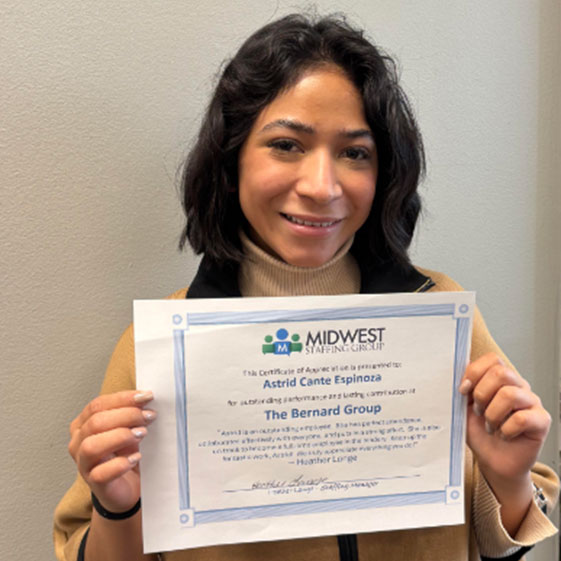
Employee Successes like “Astrid Cante Espinoza” prove that temp work can lead to great things when done right with the right help.

Client Quote: Astrid is an outstanding employee. She has perfect attendance, collaborates effectively with everyone, and puts in a strong effort. She is also on track to become a full-time employee in the bindery. Keep up the fantastic work, Astrid! We truly appreciate everything you do!


Holiday temp jobs give students flexible hours

Flexibility with Schedules

Temporary holiday jobs are often designed with flexibility in mind. Students can take advantage of roles with part-time hours or weekend shifts, making it easier to balance work with study schedules. Many employers offer evening or overnight shifts, which can be ideal for students who are busy during the day. Check them out here!

Valuable Work Experience

Holiday jobs give students exposure to real-world work environments. They can develop transferable skills such as communication, teamwork, and time management. Working in retail, hospitality, or event planning during the holiday season helps students build resumes with relevant experience.

Holiday temp jobs give savings with extra cash for expenses.

Extra Cash for the Holidays

For students, the holiday season often comes with added expenses for gifts, travel, or personal goals. A temporary job provides a much-needed financial boost. Many holiday positions also offer overtime pay, especially during peak times like Black Friday or the week before Christmas.

Networking Opportunities

Holiday jobs are a great way to meet new people, from coworkers to managers. These connections can lead to future job opportunities or serve as professional references for internships or long-term positions.

Easy Entry-Level Positions

Most temporary holiday roles don’t require extensive experience, making them ideal for students. Common positions include:

Perks Beyond Pay

Some employers offer seasonal workers discounts, free meals, or even bonuses for completing their contracts. These perks can be especially appealing to students who want to stretch their earnings further.

Pro Tip for Success

Students should apply early, as holiday jobs fill up quickly. Crafting a strong, tailored resume and preparing for quick interviews will improve chances of landing a position. PS: Midwest Staffing can help with all these things. Apply now to see how we can help.

Temporary holiday work provides students with an opportunity to grow professionally, earn money, and still enjoy the festive spirit. It’s the perfect stepping stone for future career success while making the most of the holiday season.

TEMPORARY WORKERS MAKING A DIFFERENCE ACROSS INDUSTRIES

Temporary Workers Making a Difference Across Industries

Temporary staffing has become an essential solution for businesses needing quick, reliable support. From boosting productivity to helping meet urgent deadlines, temp workers are proving their worth across industries like manufacturing and warehousing. At Midwest Staffing, we’re proud to see our temp workers stepping in to make a real difference.


1. Manufacturing Productivity Boost

In manufacturing, high demand and tight deadlines are constant challenges. We placed Alex, a temp warehouse worker, with a manufacturing facility that needed help meeting its production targets. With his attention to detail and safety, Alex quickly became an asset, increasing productivity and minimizing errors on the line. Impressed by his efficiency, the company offered him a full-time role.

Impact: Alex’s efforts allowed the company to keep up with orders, maintain quality standards, and reduce workplace injuries—demonstrating how temp workers bring value to the production floor. According to Manufacturing.net, temporary workers are crucial in supporting productivity and quality assurance in manufacturing environments, especially when output needs surge during busy periods (Manufacturing.net – The Role of Temporary Workers in Manufacturing).


2. Warehouse Efficiency During Peak Season

During a busy holiday season, a major warehouse required additional hands to manage inventory and shipping. We placed Sam, an experienced temp worker, who immediately improved the team’s workflow by reorganizing inventory, which made picking and packing more efficient. Sam’s dedication and ability to adapt to the fast-paced environment helped the warehouse meet its high-volume deadlines without compromising quality.

Impact: Sam’s contribution allowed the business to manage increased demand smoothly, reducing stress on permanent staff and keeping orders on schedule—proving the value of temps in seasonal warehousing. This flexibility is why many businesses turn to temporary staffing during peak seasons, as noted in Forbes.


3. Manufacturing Quality Assurance

One of our manufacturing clients needed temporary support to manage quality control during a product launch. We assigned Lisa, a temp worker with a background in quality assurance, who quickly integrated with the team. Her attention to detail and proactive communication helped prevent errors in production, leading to fewer defects and improved customer satisfaction.

Impact: Lisa’s role was instrumental in maintaining high product quality during a critical time, showing how temporary staff can help uphold quality standards under tight deadlines. For many manufacturers, temp workers offer a quick solution to meet quality demands, especially when output needs to increase rapidly, as discussed in the American Staffing Association.


4. Warehouse Inventory Management

With a large shipment incoming, a logistics company needed quick hires for warehouse inventory management. We placed Raj, a temp worker with inventory experience, who quickly optimized stock organization and helped the team reduce misplacements. His efficiency helped the warehouse maintain accurate inventory counts, reducing delays and ensuring smooth operations.

Impact: Raj’s work streamlined warehouse operations, showing how temp workers can provide efficient solutions for inventory management needs, especially during high-demand periods. The U.S. Bureau of Labor Statistics highlights the importance of warehouse temp workers in supporting fluctuating workloads and inventory needs (U.S. Bureau of Labor Statistics – Employment and Wages in Warehousing and Storage).


Why Choose Temporary Staffing for Manufacturing and Warehousing?

These success stories illustrate how temporary staffing meets urgent hiring needs across manufacturing and warehousing. Temporary workers provide the flexibility, specialized skills, and efficiency that industries with fluctuating demand require, allowing businesses to achieve productivity goals and meet customer expectations.

To learn more about the benefits of temporary staffing, Indeed provides a comprehensive overview of how temp workers can support various industries with reliable, on-demand solutions (Indeed – Benefits of Temporary Staffing).


Looking to Hire Quickly? At Midwest Staffing, we connect you with skilled temp workers who can hit the ground running. From seasonal warehouse support to specialized roles in manufacturing, our candidates are ready to help your business meet its goals. Contact us today!

HOW TO THRIVE IN A MULTI-CULTURAL WORK ENVIRONMENT

There are numerous benefits to working with diverse teams of co-workers. Multi-cultural work environments bring forth positive attributes like creativity, new perspectives, unique solutions, and the influence of workplace culture. Working with individuals of different ethnic backgrounds may also present challenges and misunderstandings. In today’s multi-cultural society it’s crucial for employees to learn norms and expectations of other cultures. Embracing differences promotes staff and client relations, and also contributes to pleasant work environments.

TIPS TO THRIVING IN A MULTI-CULTURAL WORKPLACE:

1. Begin by researching common cultures in your work environment. There are interesting facts and suggestions to promote social skills on the job. Learning beliefs and behaviors brings understanding and improves communication among staff.

2. Speak to your supervisor about your interest. Leaders can direct you to resources, valuable information, and conduct meetings for the benefit of all employees.

3. Show curiosity in various cultures. For instance, if a staff member brings an ethnic dish to the holiday party you can ask about the ingredients, or if the dish is a typical ethnic food, etc. The idea is to welcome other cultures and to encourage individuals to share their ethnic backgrounds.

4. Communicate any misunderstandings with your supervisor before confronting an employee. Supervisors can share light on the situation providing information you may not have known. They can also speak to the employee about the issue giving your perspective in a professional manner. Be sure to follow-up with your supervisor to ensure matters have been resolved, and to discuss solutions. 

5. Be respectful of cultural differences. It’s rare to agree on all matters among people who share common backgrounds, let a lone when interacting with different cultures. Be mindful of other employee’s beliefs and ethnic norms. Keep in mind that embracing differences helps promote relationships and a better workplace.

EMBRACING DIVERSE PERSONALITIES AT WORK

Most of us have encountered personality clashes in the workplace at some point. We each have unique talents, skills, and positive attributes to share with others at work. Differences can foster creative strategies and team building, or in contrast create conflict when disparities are not handled appropriately. Business Insider comments on temperaments at work mentioning, “Conflict at work is inevitable, but some personalities are more likely to clash than others.” For effective teamwork it’s crucial to master interpersonal skills and remain adaptive to various personalities we may encounter on the job.

Business Insider shares 4 main types of personalities commonly seen in the workplace:

1. Dominant: Individuals with this type of personality tend to be more impulsive and skeptical, preferring immediate results.

2. Conscientious: Individuals who are detailed oriented and analytical.

3. Influential: People who enjoy group projects and teamwork. These individuals can be impulsive and warm.

4. Steady: Patient, meticulous, and warm people who seek harmony at work.

According to Business Insider dominant personalities tend to experience more conflict than other types, and often conflict with people who display steady behaviors. It can be challenging to work with individuals whose personality is very similar, or extremely different from your own. Yet, when co-workers come together and embrace each other’s strengths the results are astounding. Personality clashes are expected when operating in a team environment, yet the key is to remain open to new ideas and not allow differences to negatively impact employee relations. Effective results are often a collaboration of many great minds working together aside to their differences. Some personalities can be tougher to deal with than others, but with patience, understanding, and cooperation in part of employees optimal teamwork can be accomplished.

TIPS FOR JOBSEEKERS WITH DISABILITIES SEEKING EMPLOYMENT

Pursuing employment can be quite intense as jobseekers prepare to highlight occupational skills and potentials that supersede those of other applicants. The job search requires thorough preparation such as proper attire, anticipating interview questions, and doing researching on the company and/or leadership team. People with disabilities may face other challenges along with the normal stressors involved in seeking work. Unfortunately there are instances were employers stereotype people with disabilities, making it difficult for some individuals to find fulfilling jobs. As a result some people prefer not to share their disabilities for fear of humiliation or disqualifications of potential job openings. Sadly such individuals are deprived from the deserved opportunity to share his or her given potential in the workplace.

The United States Department of Labor defines The American’s with Disabilities Act (ADA) as follows; “The Americans with Disabilities Act (ADA) prohibits discrimination against people with disabilities in employment, transportation, public accommodation, communications, and governmental activities. The ADA also establishes requirements for telecommunications relay services.” Employers cannot discriminate when providing employee trainings, promotions, or benefits. Also, upon hire employers must provide suitable accommodations for people with disabilities to meet job requirements. The U.S. Equal Employment Opportunity Commission (EEOC) advises jobseekers to determine if job duties can be performed with adequate employer accommodations when seeking employment. Doing so decreases the burden of applying to numerous jobs and ensures protection under the ADA.

The EEOC comments further on how the ADA defines disability noting:

To be protected under the ADA, you must have, have a record of, or be regarded as having a substantial, as opposed to a minor, impairment. A substantial impairment is one that significantly limits or restricts a major life activity such as hearing, seeing, speaking, walking, breathing, performing manual tasks, caring for oneself, learning or working.

TIPS FOR JOBSEEKERS WITH DISABILITIES SEEKING EMPLOYMENT:

1. Research your employment rights. The EEOC and The United States Department of Labor offer resourceful information on ADA and related topics.

2. Partner with organizations in your area for employment opportunities and other available services for people with disabilities.

3. Focus on your strengths. We each have unique skills and abilities to share with others. Highlight individual skills and qualities that will be of positive contribution to the related job position. For instance: “I am excited to apply for the administrative assistance position. I feel confident in my potential to not only meet but also exceed company expectations. I am great with people skills and love to help others.” If the opportunity allows you can share your vision and potentials with the interviewer.

4. Work with a human resource or staffing personnel who can provide sound guidance and assistance throughout the hiring process. Staffing professionals are experienced in the field and can assist with resume tips and interview preparation. Human resource personnel can also suggest how, when, and to whom to address personal accommodations and disability questions.

5. Never feel inferior to other applicants. Career success is highly influenced by our mental attitude to follow through goals and aspirations with confidence. You know your individual strengths better than anyone else. Tap into your personal gifts and talents, seeking employment opportunities that align with your skills, abilities, and career goals.

REDUCE STRESS WITH SIMPLIFIED LEADERSHIP SKILLS

Contributions and benefits inspire some to acquire management positions, but effective leadership requires more than a job title. Roles and responsibilities in the workplace vary according to job industry and company needs. There are various levels and styles of leadership, but one common experience shared by many in management positions is stress.How can we minimize stress for smarter and simplified work performance? Is working to the point of exhaustion detrimental or essential for successful leadership? Let’s explore together!

Working long shifts and cutting on lunch breaks may seem like heroic acts for your team, but in reality you may be cheating out your potential and company success. According to the Statista – The Statistical Portal, workload and interpersonal relations are the main causes of occupational stress. Statista goes on to state, “More than one third of employees lose one hour or more per day in productivity, while almost one third miss between three and six days per year due to stress.” Eustress is a healthy form of stress that helps increase focus and productivity. Burnout on the other hand occurs when faced with numerous responsibilities, job expectations beyond our reach, issues with coworkers, multiple deadlines, and other factors leading to workplace stress. The good new is there are ways to work smarter and more simplified to help decrease stress and prevent burnout!

8-Stress-Reducing Tips to Prevent Burnout:

1. Take a break. Each day brings numerous demands and deadlines, but it’s crucial to take at least a 30-minute break when working long hours. Employers offer different break schedules depending on the number of hours worked each day. Use break times to disconnect from work-related activities. This provides an opportunity to step away from stressors, recharging the mind with more creativity and focus.

2. Don’t skip on meals. The brain requires glucose (sugar) for optimal concentration and mental performance. Skipping on meals can influence energy levels, concentration, and work performance as well as your overall health.

3. Get a 5 min breather. Some days can be more challenging than others. If you are having a stressful workday, take 5 minutes to breathe and calm yourself down. Ask your employer if you can take 5 minutes of breathing space. Something as simple as stepping outside for 5 minutes can make a difference in decreasing stress levels.

4. Plan your day in advance. Unexpected situations occur, yet we can establish workflow consistency by planning activities and tasks ahead of time. For instance, make a list of projects and responsibilities requiring top priority and accomplish these early during the day, listing less important tasks for the end of your workday. Some people also find it productive to schedule significant tasks during times of the day when his or her energy levels are at its peak. This allows for more proficient work and also contributes to effective time management.

5. Simplify your workload. Breakdown projects into manageable tasks to be accomplished throughout the workday, this can decrease stress when faced with multiple deadlines. Rather than focusing on the time crunch, gear your attention to a few tasks that must be completed on a timely fashion.

6. Delegate responsibilities. Allow other employees to assist you as much as possible. Sharing responsibilities with coworkers decreases workload and promotes teamwork and collaboration.

7. Communicate needs to higher authorities. If you’ve tried all the suggestions listed above and others, yet still feel overwhelmed with job responsibilities it may be time to discuss your concerns with a higher authority. Your boss can provide additional suggestions and strategies that can prove beneficial.

8. Allow for introspection and reflection. Take time to review your work habits, reflecting on areas that require improvement and change. This is not a time to judge yourself, but rather an opportunity for growth and mastering leadership skills. Reflection shares light into job situations and strategies to promote stress-reduction in the workplace.

HOW TO STAY CALM & COLLECTED ON YOUR FIRST DAY OF WORK

The first day on your new job has arrived! You’re anxious, scared, and intimidated by more experienced employees. Everyone knows you’re a new graduate and the look of fear on your face clearly spells out “rookie”. There are ways to create an atmosphere that promotes business relationships and a positive first impression. Yes, even if you are fresh out of graduate school!

STRATEGIES TO STAY CALM & COLLECTED ON YOUR FIRST DAY OF WORK:

1. Keep your cool. Literally. No one likes to share an office with a sweaty and stinky co-worker. Although it may be nerve wrecking to start the “job of your dreams”, anticipate all possible scenarios by selecting comfortable and airy attire that fits your job position. This will keep you looking and feeling fresh.

2. Maintain your confidence. There are many employees, which can attest that longevity doesn’t always amount to a qualified employee or to better work performance.  There are new hires including graduates, which are just as skilled and perform better on the job than employees with seniority. Be confident in yourskills and area of expertise, knowing you have much to contribute to the company.

3. Don’t be intimidated to ask questions. Many times new employees want to be self-sufficient from day one, with the idea of not burdening others or delaying the work flow. In all truth, everyone expects new hires to have lots of questions and to go through a period of training. During this time mistakes may occur, but they can serve as a springboard for future success.  I’m not referring to negligence or lack of professional conduct, but rather to a general expectation that new hires are in a process of learning and becoming acquainted with the workplace.

4. Familiarize yourself with the work environment. Arrive a few minutes early and get acquainted with the work setting. For example, locate emergency exits, restrooms, employee lounge, meeting rooms, storage rooms, and employee login area. Becoming acquainted with your job setting is one less stressor that can be addressed early on in your work day. Some employees are privileged to attend orientation prior to the first day of work, yet regardless all employees can arrive a few minutes early and explore the environment.

5.  Greet everyone with a friendly attitude. For the most part people like the company of other positive individuals. There’s a lot to learn and mentally digest on the first day of work, and there may be little time left to interact with co-workers. Break time is a great opportunity to become acquainted with other employees in your workplace. 

Wishing you much success on your first day of work!