Temp-to-Perm Conversion Rates: What the Numbers Say About Landing a Full-Time Role in 2026

Infographic showing temp-to-perm conversion rate

If you’re considering temporary work as a stepping stone to permanent employment, you’re not alone—and the data shows you’re making a smart move. A recent survey by the American Staffing Association revealed that nearly 60% of temporary workers successfully transition into permanent positions (American Staffing Association), proving that temp-to-hire opportunities are more than just a foot in the door. At Midwest Staffing, we’ve been connecting job seekers with leading employers across Minnesota and North Dakota since 1990, and we’ve seen firsthand how temporary assignments can launch lasting careers.

For employers, the numbers tell a compelling story too. The median temp-to-perm conversion ratio among large contingent workforce buyers was 10% for North American companies, according to Staffing Industry Analysts (Staffing Industry Analysts)—meaning one in ten temporary workers transitions to a traditional employee role. But that’s just the baseline. With the right staffing partner, the right preparation, and a clear understanding of what employers are looking for, candidates can dramatically improve their chances.

Six in 10 staffing employees (64%) work in the industry to fill in the gap between jobs or to help them land a job (American Staffing Association), making temporary work one of the most strategic paths to full-time employment available today. Whether you’re a job seeker exploring contract-to-hire opportunities in the Twin Cities or Fargo area, or a business considering temp-to-perm hiring to reduce recruitment costs, understanding today’s conversion rate trends can help you make smarter workforce decisions heading into 2026.


Understanding Temp-to-Perm Conversion Rates by the Numbers

Before diving into strategies, let’s look at what the data actually tells us about temp-to-perm conversions in today’s job market.

Key Industry Statistics for 2025-2026

  • Nearly 60% of temporary workers successfully transition into permanent positions, according to the American Staffing Association. (American Staffing Association)
  • The median conversion ratio among large companies is 10% in North America, 8% in Asia Pacific, and 5% in Europe. (Staffing Industry Analysts)
  • Over 70% of employers use temp-to-hire as part of their permanent hiring pipeline, making temporary work a legitimate path to career advancement. (Constellation Search Group)
  • 35% of temporary workers are offered permanent positions by their clients, and 66% of those workers accept the offers. (Alliance Employment Services)
  • U.S. staffing companies employed 2.2 million temporary and contract workers per week in late 2024, with numbers rebounding in 2025. (American Staffing Association)

These statistics reveal an important truth: temp-to-perm isn’t just possible—it’s increasingly common. For job seekers in the Minneapolis-St. Paul metro area and Fargo region, these numbers represent real opportunities to build long-term careers through strategic temporary placements.


Industries with the Highest Temp-to-Perm Conversion Rates

Not all industries convert temporary workers at the same rate. Understanding which sectors offer the best opportunities can help you focus your job search strategically.

Manufacturing and Production

Manufacturing consistently ranks among the top industries for temp-to-perm conversions. Companies in this sector often use temporary assignments to evaluate workers’ reliability, safety compliance, and production efficiency before extending permanent offers (Contrax Workforce). In the Twin Cities area, where manufacturing remains a cornerstone of the regional economy, skilled production workers who demonstrate consistency and attention to quality are frequently converted to permanent roles.

Warehouse and Logistics

With e-commerce driving unprecedented demand for distribution and fulfillment workers, warehouse and logistics positions offer excellent conversion potential. Employers in this space value dependability and the ability to work efficiently under pressure. Forklift operators, warehouse associates, and quality assurance testers who prove themselves during peak seasons often transition to permanent positions (Constellation Search Group).

Healthcare Support

Healthcare organizations face ongoing staffing challenges and frequently use temp-to-perm arrangements to assess fit before committing to long-term employment (Akraya). Medical administrative assistants, patient intake coordinators, and pharmacy technicians who demonstrate strong communication skills and attention to detail are prime candidates for permanent conversion.

Administrative and Office Support

Office and administrative roles remain strong candidates for temp-to-perm conversion. Companies appreciate the opportunity to evaluate organizational skills, software proficiency, and cultural fit before making permanent hiring decisions. For candidates, these positions offer exposure to company operations and the chance to build relationships across departments (IBISWorld).


7 Proven Strategies to Increase Your Temp-to-Perm Conversion Chances

At Midwest Staffing, we’ve helped thousands of temporary workers transition to permanent employment over our 30+ years in the staffing industry. Here are the strategies that consistently lead to successful conversions:

1. Treat Every Day Like a Working Interview

From day one, approach your temporary assignment as an extended job interview. Hiring managers form lasting impressions within the first 30 days, according to LinkedIn research (Constellation Search Group). Arrive early, dress professionally, and consistently exceed expectations. Every task—no matter how small—is an opportunity to demonstrate your value.

2. Build Reliability as Your Foundation

Dependability ranks higher than innovation for most employers when evaluating temporary workers for permanent positions. A CareerBuilder report found that reliability is one of hiring managers’ top priorities (Constellation Search Group). Show up on time, meet deadlines, and maintain a positive attitude even during challenging moments. Temporary workers who demonstrate resilience and a can-do mindset are viewed as long-term candidates.

3. Actively Seek and Apply Feedback

Research from Harvard Business Review shows that employees who actively request feedback are perceived as more competent and motivated by their supervisors (Constellation Search Group). Don’t just ask “How am I doing?”—ask specific questions like “What could I improve to add more value?” Then demonstrate that you’re applying what you’ve learned.

4. Embrace the Company Culture

The Society for Human Resource Management (SHRM) found that over 80% of recruiters consider cultural fit to be a top factor when deciding on permanent hires (Constellation Search Group). Engage meaningfully with colleagues, participate in team activities, and demonstrate alignment with the company’s values. When people enjoy working with you, they’ll advocate for keeping you around.

5. Go Beyond Your Job Description

Temporary workers who stand out often volunteer to help with additional projects or learn new skills that benefit the team. Cross-training, picking up extra skills like forklift certification, or offering to help during busy periods demonstrates initiative and investment in the company’s success (Spectra360).

6. Communicate Your Interest Clearly

Many temporary workers miss conversion opportunities simply because they never expressed their interest in staying (Monster). After completing a successful milestone, have a thoughtful conversation with your supervisor. Frame it around what you’ve learned, what you’ve enjoyed, and how you see yourself contributing long-term. Ask what specific steps you can take to be considered for a permanent role.

7. Partner Closely with Your Staffing Agency

Your staffing agency is your advocate. Keep your recruiter informed about your performance, goals, and interest in permanent placement (AMPM Employment). At Midwest Staffing, our team maintains close relationships with our client companies and can help advocate for high-performing temporary employees when permanent opportunities arise.


For Employers: Why Temp-to-Perm Hiring Makes Business Sense

If you’re an employer in Minnesota or North Dakota considering temp-to-perm hiring strategies, the data strongly supports this approach as a cost-effective way to build your workforce.

Key Benefits of Temp-to-Perm Hiring

  1. Reduced Hiring Risk: Evaluate candidates’ actual job performance, cultural fit, and work ethic before committing to permanent employment. (Activated Scale)
  2. Lower Recruitment Costs: Staffing agencies handle initial screening, background checks, and onboarding, reducing your HR burden. (Activated Scale)
  3. Faster Time-to-Productivity: Converted employees already understand your processes, systems, and culture, eliminating the learning curve. (Akraya)
  4. Improved Retention: Workers who transition from temp to permanent roles have already demonstrated commitment and are more likely to stay long-term. (Activated Scale)
  5. Workforce Flexibility: Scale your team up or down based on business demands while identifying your strongest performers for permanent positions. (Indeed)

Hiring manager shaking hands with manufacturing worker after successful temp-to-perm job offer at Midwest staffing agency

Real Success Stories from Midwest Staffing

At Midwest Staffing, we celebrate our employees’ successes. Here are just a few examples of temporary workers who made lasting impressions and earned permanent positions:

  • Ana G. made an impressive impact from day one. Within a month, she accepted a team lead role and became one of the best-performing area leaders in production. Her client praised her leadership, communication skills, and pride in quality work. (Midwest Staffing)
  • Georgi G. has successfully worked with Midwest Staffing at one client for over 15 years. His supervisor describes him as “a core member of our team” whose work ethic is “second to none.” (Midwest Staffing)
  • Larry H. was hired permanently after consistently answering the call whenever help was needed. His client noted his dependability, hard work, and genuine enjoyment of his craft. (Midwest Staffing)

These success stories represent the potential that exists when talented workers partner with the right staffing agency and approach temporary assignments with commitment and professionalism.


Diverse team welcomes new manufacturing employee in safety vest after successful temp-to-perm conversion at Midwest Staffing

What to Expect from the Temp-to-Perm Process

Understanding how temp-to-perm arrangements typically work can help you navigate the process successfully:

  • Trial Period: Most temp-to-perm arrangements include a trial period of 60 to 90 days, during which both you and the employer evaluate the fit. (Constellation Search Group)
  • Performance Evaluation: Employers assess your reliability, skill development, cultural alignment, and overall contribution to the team. (Activated Scale)
  • Conversion Discussion: When you’re offered a permanent position, be prepared to discuss salary expectations and benefits. The permanent role may include health insurance, retirement plans, paid time off, and career advancement opportunities. (Fortune)
  • Conversion Fees: Employers typically pay a conversion fee to the staffing agency, calculated as a percentage of your first-year salary (often 10-25%). This is handled between the employer and agency—it doesn’t affect your compensation. (FoxHire)

Start Your Path to Permanent Employment Today

The data is clear: temporary work is one of the most effective pathways to permanent employment in 2026. With the right approach, the right skills, and the right staffing partner, you can dramatically increase your chances of converting a temporary assignment into a lasting career.

At Midwest Staffing Group, we’ve been connecting job seekers with quality employers throughout Minnesota and North Dakota since 1990. Our team understands the local job market, maintains strong relationships with top employers, and is committed to helping you achieve your career goals—whether that’s finding flexible temporary work or transitioning to a permanent position.

Ready to take the next step? Visit our Job Board to explore current opportunities, or apply now to get started with our team. With eight branches across the Twin Cities, Fargo, and surrounding areas, we’re here to help you find your next opportunity.


Contact Midwest Staffing Group

Phone: (651) 641-0442 | Email: service@midweststaffing.com

www.midweststaffing.com

Minnesota Manufacturing Jobs in 2026: Your Guide to Light Industrial Careers in the Twin Cities

Light industrial workers showcasing job trends in light industrial temp agency in 2026

If you’re looking for stable, well-paying work in the Minneapolis-St. Paul metro area, light industrial and manufacturing jobs might be exactly what you need. With over 320,000 Minnesotans working in manufacturing—making it the state’s second-largest employing industry—these aren’t just temporary gigs. They’re real careers with solid paychecks and actual advancement opportunities.

At Midwest Staffing, we’ve been connecting talented workers with great manufacturing and light industrial opportunities across the Twin Cities since 1990. We know this market inside and out, and we’re seeing some exciting changes happening right now. Let’s talk about what’s really going on in Minnesota’s light industrial sector and what it means for your career in 2026.


Why Minnesota Manufacturing Matters Right Now

Here’s something you might not know: Minnesota manufacturing workers earn an average of $83,280 annually—that’s about $9,000 more than the state’s overall average wage. And the industry isn’t slowing down. Minnesota is expecting more than 93,000 job openings for manufacturing production positions through 2032.

Translation? If you’re reliable, willing to learn, and ready to work, there are opportunities waiting for you right here in the Twin Cities metro.


What’s Changing in Minnesota Light Industrial Jobs

Wages Are Finally Going Up

Let’s talk money. Manufacturing workers in Minnesota are seeing better pay than they have in years. Companies across Brooklyn Park, Shakopee, Eagan, and throughout the metro are competing for good workers, and that means higher starting wages, better benefits, and signing bonuses becoming more common.

Many entry-level light industrial positions now start at $16-18 per hour, with experienced workers in specialized roles earning $25-35+ per hour. Add in shift differentials for nights and weekends, and you can build a pretty solid income.

Skills Matter More Than Diplomas

Here’s some genuinely good news: 81% of companies nationwide (and Minnesota manufacturers are no exception) now hire based on what you can actually do rather than what degrees you have. Can you operate equipment safely? Handle basic quality checks? Work with inventory management systems? Show up on time and work as part of a team? That’s what matters.

Many Minnesota manufacturing jobs can be started with just a high school diploma or GED, and companies provide on-the-job training. Your work ethic and willingness to learn count more than ever before.

Technology is Part of the Job (But You Can Learn It)

Here’s the reality: about 50% of manufacturers are integrating AI and automation into their operations. But before you panic—81% of manufacturing work still needs human hands and human brains. Technology isn’t replacing workers; it’s changing what they do.

Today’s warehouse and production workers use scanners, tablets, and computer systems to track inventory, monitor quality, and keep operations running smoothly. If you can use a smartphone, you can learn these systems. Most employers provide training, and honestly, it makes the work easier and safer.

Flexibility Is Becoming Standard

Need to work second shift? Prefer weekends? Looking for overnight work? Minnesota manufacturers are offering more shift options than ever, often with premium pay for less traditional hours. Companies have figured out that flexibility helps them attract and keep good workers—and that benefits everyone.


Reception or front desk in an officebuilding

Types of Light Industrial Jobs in the Twin Cities

The Minneapolis-St. Paul metro offers diverse opportunities:

Warehouse and Distribution: Order pickers, forklift operators, shipping/receiving clerks, and material handlers. Pay: $16-25+ per hour

Manufacturing and Production: Machine operators, assembly workers, quality control inspectors, and production technicians. Pay: $18-35+ per hour

Maintenance and Skilled Trades: Industrial maintenance techs, electrical/mechanical helpers, and equipment operators. Pay: $22-40+ per hour


What Employers Are Really Looking For

After placing thousands of workers in light industrial positions across the Twin Cities, we know what makes someone successful in these roles:

Reliability Above All: Show up on time, every time. This is the #1 thing employers care about. Minnesota manufacturing runs on schedules, and being dependable makes you invaluable.

Safety Mindset: Manufacturing environments have real hazards. Following safety protocols, wearing required PPE, and watching out for your coworkers isn’t just good practice—it’s mandatory.

Willingness to Learn: Whether it’s a new machine, a different process, or updated software, being open to training and new skills sets you apart.

Team Player Attitude: Most light industrial work happens in teams. Being someone others want to work with matters just as much as your technical skills.

Basic Computer Literacy: You don’t need to be a tech expert, but being comfortable with basic computer systems, handheld scanners, and digital processes is increasingly important.


Why Temporary Staffing Makes Sense in Minnesota

For Job Seekers:

  • Get your foot in the door with temp-to-hire opportunities
  • Try different companies before committing long-term
  • Start earning immediately—we can place you within days
  • We handle paperwork, background checks, and coordination
  • Get expert guidance on which companies and roles fit you best

The Reality: Many temporary placements turn permanent. Companies like evaluating workers before permanent offers, and workers like testing workplace culture first.


The Minnesota Advantage: Why Work Here

Strong Labor Market: Low unemployment means workers have leverage and good companies compete for talent.

Career Pathways: Clear advancement routes from operator to lead to supervisor positions exist across the industry.

Diverse Industries: Medical devices, food production, and advanced manufacturing offer variety in what you can do.

Stable Economy: Minnesota’s diverse economy means more stable manufacturing jobs than single-industry states.


Getting Started: Your Next Steps

Ready to explore light industrial opportunities in the Twin Cities? Here’s how to move forward:

1. Apply with Midwest Staffing

Our application process is straightforward—no fancy resume needed. We want to know your work history, what skills you have, what schedule works for you, and what kind of work interests you.

2. Talk with Our Team

We’ll have a real conversation about your experience, what you’re looking for, and what opportunities might be a good fit. We work with companies across Saint Paul, Brooklyn Park, Shakopee, Eagan, Elk River, and Vadnais Heights, so we likely have options near you.

3. Get Placed Quickly

Once we find the right match, we can often get you started within days. We handle all the coordination with the employer—you just show up ready to work.

4. Build Your Career

Whether you stay temporary for flexibility or transition to permanent employment, we’re here to support your career growth. Need training? Want to move into a different role? Looking for advancement? We’re in your corner.


What Makes Midwest Staffing Different

We’re Local: Serving the Minneapolis-St. Paul metro since 1990—we know these companies and this market.

We’re Honest: We’ll tell you what a job actually entails and what to expect. No surprises.

We’re Connected: Eight locations across the metro mean hundreds of employer relationships and more opportunities for you.


The Bottom Line

Manufacturing and light industrial work in Minnesota offers something increasingly rare these days: stable jobs with decent pay that don’t require years of college or mountains of debt. With 93,000+ openings expected through 2032 and average wages around $83,000, these aren’t dead-end positions—they’re legitimate career paths.

The work isn’t always glamorous. It can be physical, it can be repetitive, and you’ll probably get tired. But it’s honest work that pays the bills, offers advancement opportunities, and provides the stability that families need.

At Midwest Staffing, we’ve helped thousands of Minnesotans find their place in the light industrial sector. Whether you’re just starting out, looking for a career change, or simply need reliable work that respects your time and pays fairly, we’re here to help.


FAQ’s

What are the best manufacturing jobs in Minnesota?

The “best” depends on your skills and interests, but some of the highest-paying and most in-demand roles include CNC machinists, industrial maintenance technicians, quality control inspectors, and forklift operators. Medical device manufacturing and food production are particularly strong in Minnesota, offering stable employment and good wages. Machine operators and production supervisors are also consistently in demand across the Twin Cities metro.

How much do light industrial workers make in Minnesota?

Entry-level light industrial positions in Minnesota typically start at $16-18 per hour. Experienced workers in specialized roles earn $25-35+ per hour. According to state data, manufacturing workers in Minnesota average $83,280 annually—about $9,000 higher than the state’s overall average wage. Pay varies based on experience, skills, shift timing, and location within the metro area.

Do I need experience to get a manufacturing job in Minnesota?

Not necessarily. Many Minnesota manufacturers hire entry-level workers and provide on-the-job training. Companies are increasingly using skills-based hiring, meaning they care more about your ability to learn, show up reliably, and work safely than about previous manufacturing experience. A high school diploma or GED is typically required, along with basic computer literacy and a good safety record.

What’s the difference between temp and temp-to-hire positions?

Temporary positions are for a specific duration or project—you know from the start it’s temporary work. Temp-to-hire positions are designed as extended interviews: you work temporarily (usually 3-6 months) with the possibility of being hired permanently if it’s a good fit for both you and the employer. Many Minnesota manufacturers prefer temp-to-hire because it lets them evaluate workers before making permanent offers.

Are warehouse jobs in Minnesota hiring right now?

Yes. The Minneapolis-St. Paul metro is a major distribution hub, and warehouses across Shakopee, Eagan, Brooklyn Park, and surrounding areas consistently hire throughout the year. Demand typically spikes before holidays and peak shipping seasons, but there are openings year-round. Midwest Staffing works with dozens of warehouses and distribution centers across the metro.

What shifts are available in light industrial jobs?

Most light industrial positions offer multiple shift options: first shift (typically 6am-2:30pm or 7am-3:30pm), second shift (2pm-10:30pm or 3pm-11:30pm), and third shift (10pm-6:30am or 11pm-7:30am). Many facilities also offer weekend shifts and 12-hour shifts with rotating schedules. Second and third shifts often include shift differentials of $1-3 more per hour.

How quickly can Midwest Staffing place me in a job?

If you’re qualified and available, we can often place you within a few days. The timeline depends on completing your application, having an interview with our team, background check processing (usually 24-48 hours), and finding the right match. Some workers start their first assignment within a week of initial contact.

What cities does Midwest Staffing serve?

We serve the entire Minneapolis-St. Paul metro area with convenient locations in Saint Paul, Brooklyn Park, Shakopee, Eagan, Elk River, and Vadnais Heights, plus our corporate office in Eagan. We’ve recently expanded to Fargo, North Dakota as well. We place workers in positions throughout the metro and surrounding areas.

What benefits do temporary workers get?

Benefits vary by assignment, but many temporary workers through Midwest Staffing are eligible for benefits after meeting eligibility requirements. This can include health insurance options and holiday pay. Permanent placements through temp-to-hire arrangements receive full benefits from the employer once hired permanently. Specific benefits depend on the client company and assignment duration.

Is light industrial work safe?

When proper safety protocols are followed, yes. Minnesota manufacturers take workplace safety seriously, providing required training, personal protective equipment (PPE), and clear safety procedures. Most injuries occur when safety rules aren’t followed, which is why companies emphasize safety so heavily. You’ll receive safety training before starting any position, and ongoing safety reinforcement is standard across the industry.

Ready to start your light industrial career in Minnesota? Apply now or call us at (651) 641-0442 to talk with our team. We’ve got opportunities waiting across the Twin Cities metro, and we’re ready to help you find the right fit.

For employers looking to build your team, contact us to discuss how Midwest Staffing can solve your manufacturing and warehouse staffing challenges. We’ve been a trusted partner for Minnesota companies since 1990—let’s talk about how we can support your success in 2026 and beyond.

How to Discuss Job Satisfaction With Your Manager

How to Discuss Job Satisfaction With Your Manager

How To Have a Positive Conversation With Your Manager About Job Satisfaction

The employment landscape in Minnesota and the Midwest has never been more vibrant for professionals in office, industrial, and skilled sectors. Opportunities abound through Midwest Staffing, where your career journey is the top priority. Whether you love your role or see areas for improvement, initiating honest conversations with your manager can be transformative, helping you stay engaged and satisfied with your work.

Why Speaking Up Matters

Having open discussions with your manager before dissatisfaction escalates can set you apart as a proactive team member and problem-solver. Rather than waiting until discontent drives you to look elsewhere, addressing potential concerns early builds mutual respect and trust. This can lead to pathways for new responsibilities, training opportunities, and even advancement within your current workplace.

Managers genuinely appreciate employees who communicate thoughtfully and seek solutions, as it creates a collaborative environment and fosters stronger relationships.

Preparing for a Successful Conversation

Preparation is key to any constructive dialogue. Think carefully about the specific issues you want to address—whether pay, growth opportunities, workload, or team dynamics. Jot down your concerns and, if possible, propose solutions or options for improvement. Research everything relevant to your request before the meeting. For example, if you’d like to discuss professional development, have details ready about how additional training would benefit both you and the businesses clients or partners.

The more clear and focused your agenda, the more productive the conversation will be.

Scheduling Your Meeting the Right Way

Avoid bringing up sensitive topics unexpectedly. Instead, set a time with your manager dedicated to your discussion. Mention upfront the general topic you’d like to review—like performance, compensation, or work-life balance—so your manager can prepare and approach the meeting constructively. Try a statement such as: “Could we schedule a meeting this week to discuss my long-term goals here?” or “I’d value your feedback on my recent projects and want to talk about how I can keep progressing with Midwest Staffing.”

This thoughtful approach encourages openness and reduces anxiety for both parties.

Body Language and Tone Count

Keep your meeting upbeat and professional. Good posture, eye contact, and a friendly expression help maintain a positive atmosphere. Express gratitude for your manager’s time and attention and emphasize that you’re committed to improving both your personal satisfaction and team success. Invite your manager’s perspective and stay engaged throughout the conversation.

Collaborate on Solutions

Once you’ve introduced your main points, share any ideas or solutions you’ve considered. For example, if workload balance is a concern, suggest how tasks might be distributed differently or inquire about upcoming opportunities that align with your strengths. Ask for your manager’s thoughts, as they may have fresh insights or access to resources you hadn’t considered.

Being open to their input can lead to creative and practical improvements.

Follow-Up Makes All the Difference

Don’t expect every answer on the spot; managers may need time to seek input or review policies. After your meeting, send a brief thank-you message summarizing your discussion and agreed next steps. This helps clarify intentions and ensures both you and your manager are aligned.

If progress stalls, remember that Midwest Staffing can offer guidance and additional support—whether through internal opportunities, skill-building programs, or preparing for your next big move in the region’s thriving job market.

Looking Forward

Having these conversations isn’t always easy, but the more you practice, the more confident and skilled you’ll become. Taking charge of your career satisfaction is an empowering step in developing both your daily work life and long-term growth. Midwest Staffing is here to support every stage of your career, helping you find fulfillment and success wherever your path leads.


For more advice on career development, open workplace communication, and current job openings, visit Midwest Staffing’s website and connect with our team of experienced staffing professionals.

Why Light Industrial Workers in the Twin Cities Stay—or Leave

Group of light industrial workers having a meeting

Minnesota’s light industrial workforce is the backbone of many industries across the Twin Cities. From warehouse associates to assembly line operators, forklift drivers to packaging specialists, these roles keep local businesses moving. But in today’s tight labor market, keeping your best people on the job isn’t easy.

At Midwest Staffing Group, we’ve been helping Minneapolis–Saint Paul employers connect with dependable talent since 1990. We see first-hand why light industrial employees stay—and why they move on. Understanding these motivators can make the difference between a stable workforce and constant turnover.


Why Employees Leave

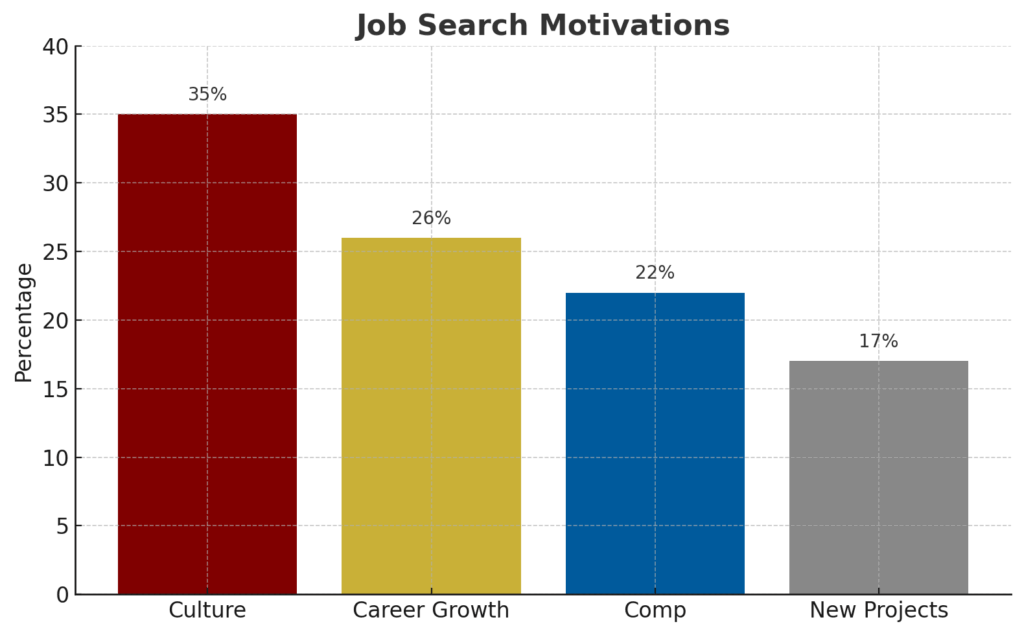
  • Lack of growth opportunities
    Many warehouse and production workers want more than a paycheck—they’re looking for advancement. Without chances to learn new skills or step into lead roles, employees often seek opportunities elsewhere.
  • Feeling undervalued
    When employees don’t feel recognized for the hard, physical work they put in, morale slips. Something as simple as acknowledging an employee’s reliability or attendance can prevent disengagement.
  • Poor communication from leadership
    In fast-paced production environments, unclear instructions or inconsistent feedback can create frustration. Workers want to know what’s expected, how they’re performing, and where they fit into the bigger picture.
Job motivation chart

What Keeps Light Industrial Talent Engaged

  • Clear expectations and trust
    Employees thrive when supervisors communicate openly and consistently. When goals are clear, trust and motivation rise.
  • Opportunities to learn new skills
    Cross-training, equipment certifications, and pathways to supervisory roles give employees a reason to stay.
  • Recognition that matters
    Highlighting strong attendance, safety performance, or productivity makes workers feel valued.
  • Purpose and stability
    Light industrial employees stay loyal when they see how their daily work keeps operations moving and supports Minnesota businesses.

How Employers Can Strengthen Retention

  • Offer advancement paths – Promote from within and highlight career growth opportunities.
  • Recognize contributions – Celebrate milestones like attendance, safety records, and productivity.
  • Communicate daily – Short huddles or pre-shift meetings build clarity and alignment.
  • Provide flexibility – Balance seasonal and peak demands with temporary-to-hire options.

The Midwest Staffing Advantage

With deep local roots, Midwest Staffing has supported Minnesota employers for more than 30 years. We specialize in light industrial roles—warehouse, production, assembly, and more—delivering workforce solutions that go beyond filling shifts.

Our team focuses on long-term matches, ensuring employees feel supported while employers see higher retention. From compliance and payroll to risk management and onboarding, we take care of the details so businesses can focus on running smoothly.


Final Thoughts

Light industrial workers are the heartbeat of Minnesota’s economy. Retaining them requires more than hiring quickly—it’s about building a workplace where employees feel valued, supported, and able to grow.

If you’re ready to reduce turnover and strengthen your workforce, Midwest Staffing is here to help.

👉 Discover staffing solutions at midweststaffing.com

How President Trump’s Big Beautiful Bill Benefits Temp Workers and Employers Alike

How President Trump’s Big Beautiful Bill Benefits Temp Workers and Employers Alike

In a major legislative move that’s already sending waves through the labor market, President Trump has signed into law what he’s calling the “Big Beautiful Bill” — a sweeping reform package designed to stimulate the economy, boost employment, and support American businesses of all sizes.

At Midwest Staffing, we’re excited about the opportunities this bill opens up — not just for the hardworking temporary workers we place every day, but also for the businesses who count on us for flexible, reliable workforce solutions. Here’s how this new legislation is creating win-win scenarios for both candidates and clients in the staffing world.

✅ Tax Incentives for Hiring Temporary Workers

One of the bill’s most impactful provisions is a tax credit for companies that hire through certified staffing agencies. This means businesses that bring on temporary workers through Midwest Staffing may now receive financial incentives just for choosing flexible hiring models. That makes using a temp agency more cost-effective than ever.

What this means for clients:
Lower overall labor costs, reduced overhead, and increased staffing flexibility during seasonal spikes or project-based workloads.

What this means for candidates:
More opportunities. As more companies tap into temporary staffing thanks to new tax breaks, demand for skilled, ready-to-work candidates is growing.


✅ Streamlined Onboarding & Reduced Compliance Burdens

The Big Beautiful Bill also includes regulatory reform aimed at reducing the paperwork and compliance burdens associated with short-term and project-based hiring. Businesses that partner with temp agencies like Midwest Staffing can now delegate more onboarding and compliance tasks to the agency — saving time and reducing legal risks.

For clients:
This simplifies workforce expansion without the red tape. Need 10 forklift drivers next week? Done — without the HR headaches.

For candidates:
Faster placement, less bureaucracy, and a smoother transition into new jobs.


✅ Skills Training & Workforce Development Grants

The bill allocates federal funding for skills-based training, particularly for industries facing worker shortages — such as logistics, healthcare, and manufacturing. Temp agencies can now partner with workforce development programs to provide on-the-job training and upskilling opportunities.

Clients win by getting more qualified candidates.
Candidates win by getting training while on assignment — and building the skills they need to land long-term, higher-paying roles.


✅ Increased Flexibility in Work Arrangements

With expanded support for remote work infrastructure, gig-friendly labor laws, and portable benefits, the bill embraces the evolving workforce. This is great news for workers who value flexibility and for employers looking to tap into non-traditional labor pools.

For clients:
It’s now easier to bring in remote support, hybrid workers, or part-time specialists without full-time commitments.

For candidates:
Greater control over your schedule, location, and work-life balance — without sacrificing income or career progress.


The Bottom Line

Whether you’re a business seeking smart staffing solutions or a job seeker looking for your next opportunity, President Trump’s Big Beautiful Bill is paving the way for growth, opportunity, and innovation in the temporary employment sector.

At Midwest Staffing, we’re staying ahead of these changes to help our clients and candidates maximize every advantage this legislation provides. Let us help you make the most of this new era in American employment.


Contact us today to find out how Midwest Staffing can connect you with the right people — or the right position — faster, smarter, and more affordably.

Facing Midwest Hiring Challenges in June 2025? Here’s How Midwest Staffing Can Help

Facing Midwest Hiring Challenges in June 2025? Here’s How Midwest Staffing Can Help

The labor market in the Midwest is more competitive than ever. As companies in Minneapolis, St. Paul, and beyond look to fill critical roles, they’re running into new and persistent talent acquisition challenges. Here’s what’s happening—and how Midwest Staffing Group is uniquely positioned to help your business thrive.


1. Skilled Worker Shortages Are Slowing Growth

The Midwest is experiencing a historic shortage of skilled workers. In Minnesota, there are only 53 available workers for every 100 open jobs (Minnesota Job Vacancy Survey), while Michigan’s ratio is only slightly better (Michigan Job Openings). This means longer hiring timelines, higher costs, and more competition for top talent.

How Midwest Staffing Group Responds

With over 30 years of experience in the Minneapolis–St. Paul metro and a recent expansion into Fargo, ND, Midwest Staffing Group has built a deep network of qualified professionals. Whether you need contract, contract-to-hire, or direct hire solutions, Midwest Staffing can quickly connect you with the right candidates—so you can keep your business moving forward.


2. The Competition for Talent Is Fierce

Employers across the Midwest are competing for the same limited pool of skilled professionals. To stand out, you need more than just a job opening—you need a partner who understands your industry and your company culture.

Midwest Staffing Group’s Advantage

Midwest Staffing’s recruiters are known for their personal touch and industry expertise. Clients rave about the team’s responsiveness and dedication:

“Midwest Staffing has truly exceeded all my expectations. They do an incredible job of finding the right fit for our organization rather than just sending candidates and hoping they stick.”
— Recruiting Manager, National Steel Supplier

The team’s commitment to open, honest communication and deep understanding of your needs sets them apart from other agencies.


3. Creating a Seamless Candidate Experience

In today’s market, a positive candidate experience can make or break your hiring process. Slow communication or unclear expectations can cause you to lose top candidates.

Midwest Staffing Group’s Approach

Midwest Staffing prioritizes clear, timely communication and a supportive approach for both clients and candidates. Their recruiters serve as advocates, ensuring every interaction is positive and respectful. This not only attracts top talent but also strengthens your reputation as an employer of choice (Minnesota Labor Data).


4. Flexible Staffing Solutions for Every Need

Whether you need temporary help, contract-to-hire options, or direct hire recruiting, Midwest Staffing Group offers flexible solutions tailored to your business. They even provide professional recruitment services through their KeyStaff Professionals division.

“Midwest is a true partner. They are customer driven and collaborative—Midwest takes personal interest in their clients and truly cares about you and your business.”
— Human Resources, Manufacturing Company in Chaska


Ready to Overcome Your Hiring Challenges?

Don’t let talent shortages slow your growth. Partner with a staffing agency that’s proven, responsive, and truly invested in your success. Contact Midwest Staffing Group today to find out how their customized solutions can help your business thrive in 2025.

What the China-U.S. Trade War Means for Midwest Manufacturing

What the China-U.S. Trade War Means for Midwest Manufacturing with Midwest Staffing

The China-U.S. trade war has placed Midwest manufacturers at a crossroads, forcing them to navigate a landscape marked by uncertainty, rising costs, and shifting supply chains. Here’s how these dynamics are playing out in the heartland-and what steps manufacturers can take to stay resilient.

Uncertainty and Planning Paralysis

Midwest manufacturers are grappling with a lack of clarity about future tariffs and trade policies. This uncertainty makes it difficult to plan long-term investments or major supply chain shifts. As one supply chain strategist put it, “the not knowing is worse” than even the harshest tariff scenario, leading many companies to freeze decision-making or delay critical moves1.

Supply Chain Constraints and Limited Alternatives

Many manufacturers in the Midwest have deep investments in China, whether through capital equipment, specialized materials, or established supplier relationships. For some, pivoting away from China is simply not feasible due to technical requirements or the lack of comparable alternatives. Even when alternate suppliers are available, quality and reliability may suffer, as seen when some companies tried to shift sourcing to India and encountered issues with product standards1.

Margin Pressure and Tariff Shock

Tariffs are squeezing profit margins, especially for companies importing finished goods or raw materials from China. For some, every unit shipped now results in a loss, and the impact varies depending on how much of their cost structure is tied to Chinese inputs. This has made cost control and operational efficiency more important than ever1.

A Catalyst for Innovation

Despite these challenges, the trade war is prompting innovation. Critical industries like semiconductors are already reshoring or diversifying production, and other sectors are following suit. The pressure is driving manufacturers to find cost-effective ways to meet customer demands, invest in new technologies, and rethink their operations for greater resilience13.

Strategic Steps for Midwest Manufacturers

  • Scout Alternative Suppliers: If possible, begin identifying and qualifying non-China suppliers.
  • Consider Partial Relocation: Evaluate whether contract manufacturing can be shifted, even partially, to countries like Mexico, India, or Vietnam.
  • Plan for Post-Trade War Demand: Prepare now for a potential rebound in demand by aligning labor strategies and ensuring capacity can scale quickly.
  • Build Flexibility: Stock up on critical materials, form flexible sourcing relationships, and set contingency plans to optimize local operations1.

Labor Remains the #1 Challenge

As manufacturers adapt, labor shortages and the need for specialized skills remain persistent challenges. The ability to scale up or down quickly, especially during periods of fluctuating demand or operational change, is crucial for maintaining competitiveness13.

Bottom Line:

The China-U.S. trade war is reshaping Midwest manufacturing, but with the right strategies-and the right workforce partner-you can turn uncertainty into opportunity. Midwest Staffing is here to help you stay agile, resilient, and ready for whatever comes next.

How Using a Staffing Agency for Spring Seasonal Staffing Can Greatly Benefit Light Industrial Businesses

How Using a Staffing Agency for Spring Seasonal Staffing Can Greatly Benefit Light Industrial Businesses from Midwest Staffing

As spring arrives, light industrial and manufacturing sectors face increased demand due to seasonal fluctuations. Partnering with a staffing agency can provide a strategic advantage in managing these workforce challenges efficiently. Here are the key benefits of using a staffing agency for spring seasonal staffing in light industrial settings:

Key Benefits of Seasonal Staffing

1. Rapid Access to Skilled Workers

Staffing agencies maintain pools of pre-vetted workers with experience in assembly, machine operation, and warehouse logistics. This allows businesses to fill critical roles within days, not weeks. As noted by Essential Personnel, seasonal staffing agencies can quickly identify candidates with relevant experience, ensuring minimal training is needed to get them started1.

2. Cost-Effective Workforce Scaling

Hiring seasonal workers reduces long-term financial commitments like benefits and year-round salaries. You pay only for hours worked, which is particularly beneficial for industries experiencing unpredictable spring demand. This approach helps manage labor costs efficiently by hiring workers only when needed, as highlighted by Eclipse Light Industrial Staffing2.

3. Flexibility for Seasonal Demand Fluctuations

Staffing agencies provide flexible solutions that allow businesses to scale their workforce up or down as needed. This adaptability is crucial for companies dealing with seasonal demands or project-based work. KP Staffing emphasizes that light industrial staffing agencies help businesses navigate fluctuating demand by providing skilled and adaptable workers who can quickly scale up or down4.

4. Reduced Administrative Burden

Agencies handle payroll, taxes, and compliance, reducing the administrative load on HR teams. This allows internal staff to focus on strategic activities rather than recruitment logistics. Qualified Staffing notes that staffing agencies take on these responsibilities, enabling companies to concentrate on improving operational efficiency and driving business growth6.

5. Mitigating Employee Burnout

Seasonal staffing prevents overworking permanent employees, maintaining morale and productivity. By leveraging temporary workers during peak seasons, businesses can alleviate pressure on full-time staff and ensure they receive the same high level of service without burnout. Essential Personnel highlights this benefit as a key advantage of seasonal staffing1.

Industries That Benefit Most

  • Manufacturing – Increased spring production demands
  • Warehousing & Logistics – Seasonal inventory and shipping spikes
  • Construction Materials – Higher demand for building supplies

Best Practices for Spring Seasonal Hiring

  • Start early – Contact agencies 4-6 weeks before peak demand
  • Define clear job requirements – Ensure skills match production needs
  • Consider temp-to-hire – Evaluate workers for potential permanent roles

Conclusion

Partnering with a staffing agency ensures light industrial businesses can scale efficiently, control costs, and maintain productivity during spring demand surges. With access to skilled workers, reduced hiring headaches, and flexible staffing solutions, agencies provide a strategic advantage for seasonal hiring. For more insights on how seasonal staffing can support your business, consider reaching out to a reputable staffing agency like Midwest Staffing, which specializes in providing tailored staffing solutions for the Minneapolis and St. Paul metro area.

Giving Back with Midwest Staffing at FMSC

Giving Back with Midwest Staffing at FMSC with Midwest Staffing

Volunteering at Feed My Starving Children (FMSC) was an incredibly rewarding and eye-opening experience! Coming together with colleagues for a common cause not only strengthened our teamwork but also reinforced the importance of giving back. It was truly humbling to pack meals for children in need across the globe, knowing that our time and effort could make a real difference.

We’re proud to represent Midwest Staffing in service to others, and we encourage everyone to take part in this impactful mission. If you have the chance, we highly recommend volunteering with FMSC—you won’t regret it!

Light Industrial Trends 2025: How Temp Staffing is Shaping the Future

Light Industrial Trends 2025: How Temp Staffing is Shaping the Future Midwest Staffing

The light industrial sector is experiencing significant growth and transformation in 2025, with temporary staffing playing a crucial role in addressing labor shortages and driving innovation. As a leading temp agency, Midwest Staffing is at the forefront of these changes, helping businesses and job seekers alike navigate the evolving landscape.

Industry Growth and Opportunities

The manufacturing industry is projected to create over 75,000 new jobs in 2025, signaling robust growth in the light industrial sector1. This expansion is driven by several key trends:

Automation and Digital Transformation

Manufacturers are increasingly embracing smart factory solutions and automation to gain a competitive edge. In fact, 86% of manufacturing executives believe these technologies will be crucial for success in the coming years4. This shift is creating new opportunities for workers with skills in operating and maintaining advanced machinery.

Sustainability Focus

With 88% of companies prioritizing sustainability, the light industrial sector is seeing a surge in eco-friendly practices and technologies1. This trend is opening up new roles in sustainable manufacturing and green logistics.

Skills-Based Hiring

There’s a growing emphasis on practical abilities rather than formal education. In the light industrial sector, this means increased demand for workers with specialized skills in inventory management, forklift operation, and assembly line efficiency7.

The Role of Temporary Staffing

Temp agencies like Midwest Staffing are playing a vital role in addressing the challenges and opportunities in the light industrial sector:

Bridging the Skills Gap

Temporary staffing agencies offer access to a diverse pool of skilled workers, helping companies quickly fill specialized roles without long-term commitments9. This flexibility is particularly valuable in an industry with fluctuating demand.

Flexibility for Businesses

Midwest Staffing provides full-service contract, contract-to-hire, and direct hire solutions, allowing businesses to scale their workforce efficiently8. This adaptability is crucial for companies dealing with seasonal demands or project-based work.

Career Growth for Individuals

For job seekers, temp work offers a pathway to enter the industry, gain valuable experience, and potentially secure long-term employment. Many companies use temporary positions as a “try-before-you-buy” approach to hiring3.

Rapid Response to Market Changes

With their extensive networks and efficient processes, staffing agencies like Midwest Staffing can quickly respond to urgent hiring needs, a common occurrence in the light industrial sector3.

Benefits for Businesses and Individuals

Partnering with a temp agency like Midwest Staffing offers numerous advantages:

For Businesses:

  • Quick access to skilled workers
  • Cost-effective staffing solutions
  • Flexibility to meet changing demands
  • Reduced administrative burden

For Job Seekers:

  • Diverse work experiences
  • Opportunity to develop new skills
  • Potential for permanent placement
  • Immediate income while exploring career options

As the light industrial sector continues to evolve, temporary staffing remains a key strategy for addressing labor shortages and driving growth. Midwest Staffing, with its commitment to customer service and successful client-candidate matching, is well-positioned to help both businesses and job seekers thrive in this dynamic environment8.

By embracing the trends of automation, sustainability, and skills-based hiring, while leveraging the flexibility and efficiency of temp staffing, the light industrial sector is poised for continued growth and innovation in 2025 and beyond.

Citations:

  1. https://www.webfx.com/industries/industrial/manufacturing/manufacturing-industry-trends/
  2. https://www.careerforcemn.com/employer/midwest-staffing-group-0
  3. https://www.staffsolutions.com/the-benefits-of-using-a-staffing-agency-for-light-industrial-jobs/
  4. https://www.sharefile.com/resource/blogs/manufacturing-industry-trends-watch-2025
  5. https://midwestprofessionalstaffing.com
  6. https://gojob.com/how-temporary-staffing-is-addressing-midwest-labor-shortages/
  7. https://northlandstaff.com/blogs/workforce-trends-2025-skills-based-hiring-and-demographic-shifts-in-light-industrial-jobs/
  8. http://midweststaffing.com
  9. https://midweststaffing.com/7-ways-temporary-staffing-agencies-help-bridge-the-skills-gap/
  10. https://www2.deloitte.com/us/en/insights/industry/manufacturing/manufacturing-industry-outlook.html
  11. https://midweststaffing.com/category/job-seekers/